Healthcare UX
Design Stories
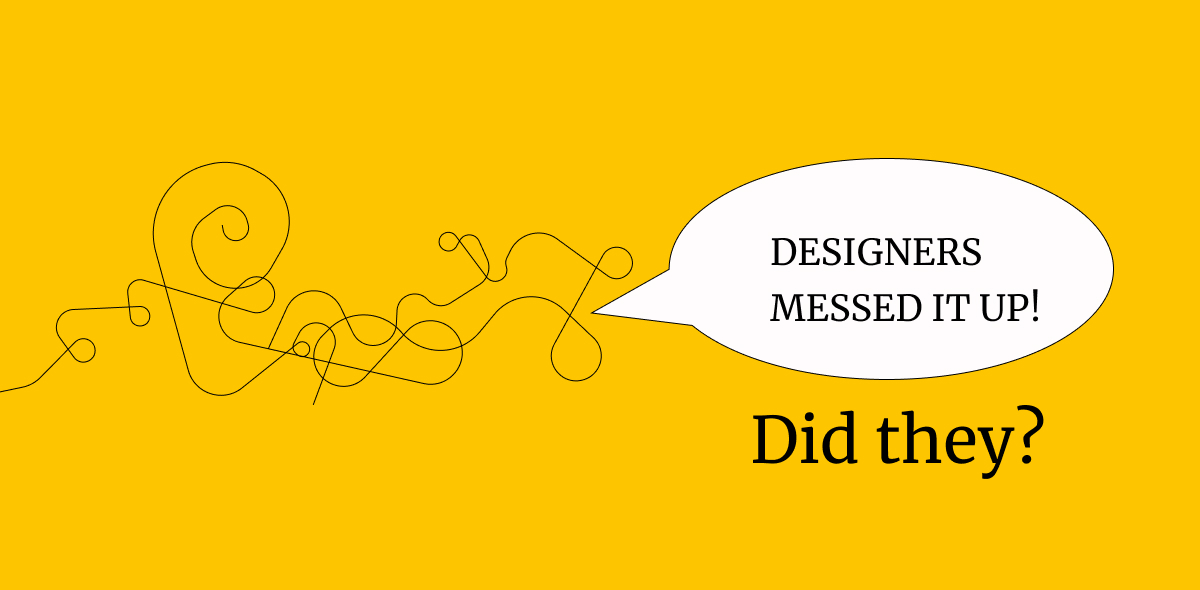
Designer Messed Up! But Did They?
When users abandon carts, get stuck in confusing flows, or leave forms half-filled, designers are often the first ones to get blamed.
When users abandon carts, get stuck in confusing flows, or leave forms half-filled, designers are often the first ones to get blamed.
Designers are not always at fault, but they are not entirely blameless either. Poor information structure, unclear visual hierarchy and inconsistent interactions are real design mistakes.
Designers are the voice of the users. They work within timelines, budgets, and business goals. When companies prioritise speed over quality, revenue over usability, or politics over users, even the best design can fail.
Take an example:
A design team builds a smartwatch with heart rate monitoring, sleep tracking, guided workouts, stress analysis, and recovery tips. Marketing promises seamless app syncing, personal coaching, and wellness insights. Users are excited.
Then, the business rushes the launch to beat a competitor. Features like sleep tracking and stress analysis are cut to save costs. Only heart rate and step counting remain. Design suggestions are ignored.
The result? Users expect a complete health assistant but get just a pedometer with a new look. “It’s nothing more than the earlier product.”
This happens often. Last-minute feature cuts, tight deadlines, and skipped user testing can confuse even the smartest designs. If organisational culture favours business goals over user experience, designers alone cannot save the product.
So, who failed here? Not just one team. Designers may have pushed back, but was it hard enough? Did other teams highlight risks early? Leadership may have prioritised speed, but were they shown the real cost of that tradeoff in terms of the user experience?
This is what organisational UX failure really looks like: not a single person’s fault, but a chain of decisions made without shared accountability.
Good designers do push back. They run usability tests, present research, and argue for the user. But advocacy without organisational support has limits. If a company’s culture deprioritises user outcomes, even the best designers cannot fully fix it.
The solution isn’t for designers to fight harder alone. The solution is for organisations to build systems where user experience is treated as a real business metric, not an afterthought.
That means involving UX early in product decisions, giving design a real voice, making usability testing mandatory even under tight deadlines, and having leadership that understands the long-term cost of shipping experiences that users don’t trust.
Design teams are often the only advocates of users. Bad experiences reflect the organisation’s culture and choices, and decisions at every level. To create products that truly delight users, start with the organisation.
We need to focus on building organisations where good design serves the user, and design advocacy is backed by the system, not just by individuals.
Have a story to share?
Join our community of designers sharing their experiences and insights.
Share Your Story