Foundations
Beginners Guide
UX vs Product Design - A Beginner’s Guide
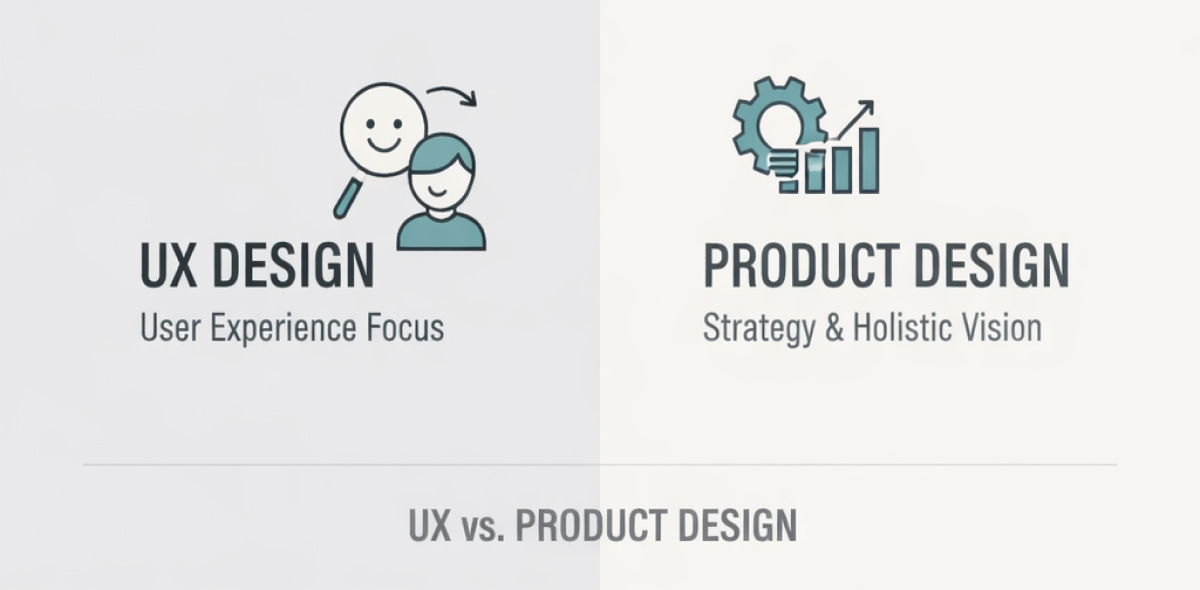
In simple terms, UX design is about designing the user’s experience, while Product design is about designing the entire product strategy and experience. UX can be seen as a specialised skill, whereas product design is a broader role that requires understanding both users and business.
UX vs Product Design - A Beginner’s Guide
User Experience (UX) focuses on how a person feels while interacting with a product. It focuses on usability, accessibility, and overall user satisfaction. UX follows a research-driven approach to understand user needs, identify pain points, and create simple, meaningful solutions to solve real problems. Product Design is a broader field that includes UX, UI, business strategy, and product thinking. It focuses on solving user problems while also aligning with business goals. Product Design works towards driving product growth, creating value, and managing the product across its entire lifecycle, from idea stage to launch and continuous improvement.
A UX Designer mainly works on understanding users and improving their experience. Their core responsibilities include conducting user research and interviews, creating user personas, and building user journeys and flows to ensure smooth interactions. A Product Designer has a broader role. They define the product vision and strategy, conduct market and competitor research, and work closely with engineers and product managers. They design both UX and UI, develop wireframes and prototypes, conduct usability testing, and improve the product based on feedback. They also analyse metrics, contribute to product roadmap decisions, and focus on making the product successful for both users and the business.
The goal of UX Design is to make products useful, usable, and enjoyable for users. Product Design, on the other hand, focuses on building products that are valuable for users while also being profitable for businesses.
A Simple Analogy for Beginners
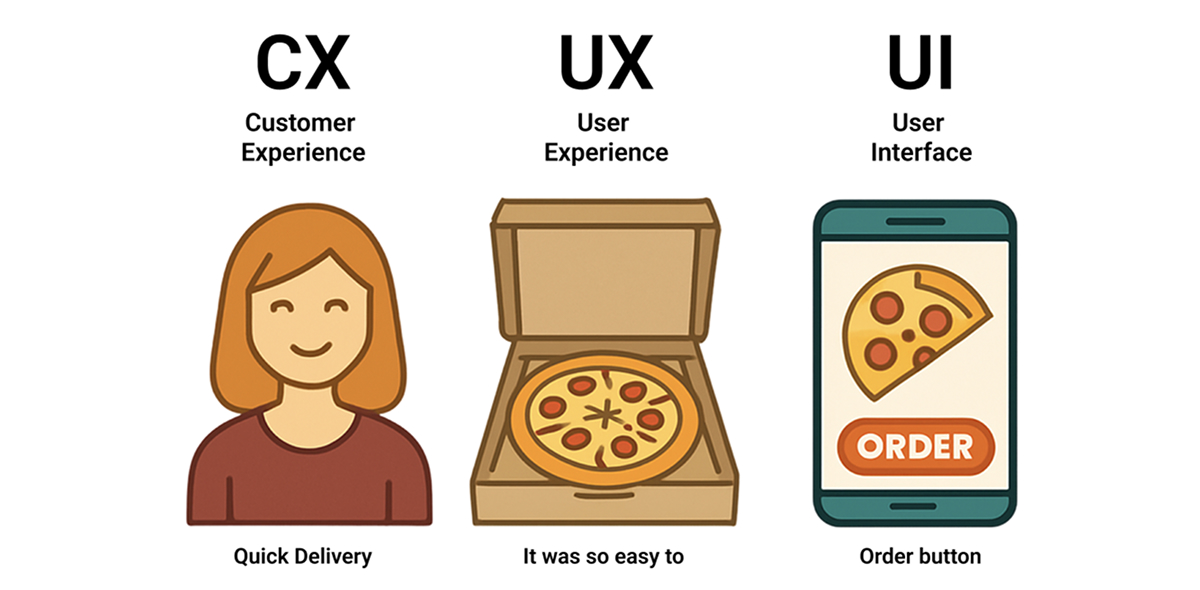
To understand this in simple terms, let us take an example of building a food delivery app: A UX designer ensures that ordering food is simple, smooth, and enjoyable. Every interaction, from searching for a restaurant to completing payment, is designed to be easy and satisfying. A product designer, however, ensures that the app not only solves customer problems but also performs well in the market, generates revenue, and can scale sustainably. In short, the product designer takes a broader view that includes strategy, growth, and business outcomes along with the user experience.
Despite their differences, UX and product designers often work on similar tasks. Both roles involve research, creating wireframes, designing user flows, testing prototypes, and collaborating with developers. In many startups or smaller companies, a single person may take on both UX and product design responsibilities. Choosing between UX and product design depends on your interests and strengths. UX design is a good path for those who enjoy understanding human behaviour, conducting research, testing usability, and focusing on human-centred interaction design. Product design is better suited for those who like combining strategy with creativity, analysing metrics, experimenting with growth, working closely with product managers, and taking end-to-end ownership of a product. In many large companies like Google, Airbnb, and Meta, the term “Product Designer” is more common, and the role usually includes UX skills. This means that even if your title is product designer, understanding UX deeply is essential to succeed.
In simple terms, UX design is about designing the user’s experience, while Product design is about designing the entire product strategy and experience. UX can be seen as a specialised skill, whereas product design is a broader role that requires understanding both users and business.
Have a story to share?
Join our community of designers sharing their experiences and insights.
Share Your Story